The Archetypes of Love in *What It Means to Love*—The Two Pillars of Motherhood and Fatherhood
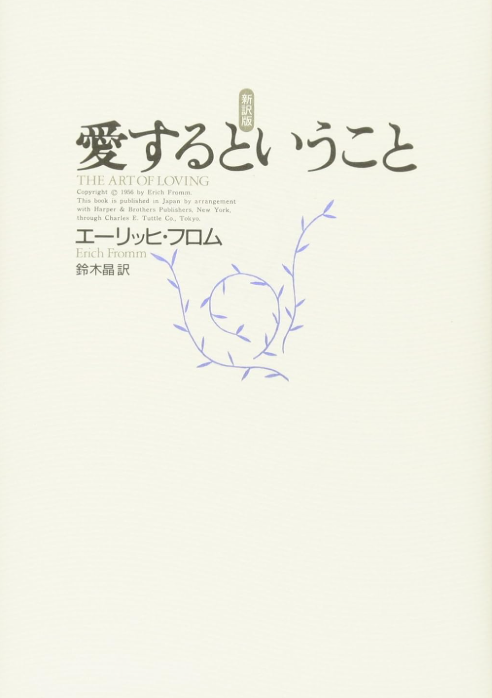
Erich Fromm’s *The Art of Loving* is a book that explores how people build mature relationships, centered on the idea that “love is not an emotion but a skill.” In it, Fromm identifies two forces—“maternal love” and “paternal love”—as the archetypes of love.Maternal love is an unconditional acceptance that affirms one’s very existence; it possesses a warmth that embraces the other person—regardless of their circumstances—with the message, “You are okay just as you are.” Paternal love, on the other hand, is described as “conditional love” that teaches responsibility and ethics and provides guidelines for order and behavior. It is a love that encourages the other person to become independent while valuing their efforts and growth.
From argues that if these two elements are too heavily weighted toward one side or the other, it becomes difficult for people to develop a healthy sense of love. Excessive motherliness makes the other person dependent, while excessive fatherliness causes them to shrink back. Mature love is nurtured by a balance between these two elements.

“Psychological Masochism” That Arises When Maternal and Paternal Instincts Are Lacking
The masochism described by Fromm refers not to a sexual meaning, but to a psychological tendency toward submission. It is a state in which one feels anxious about making decisions on one’s own and has a strong desire to entrust matters to someone else rather than take responsibility. Fromm explains that leaning on a dominant figure or undervaluing one’s own worth tends to occur when a person lacked, during childhood, a “sense of unconditional acceptance” or “a safe environment in which to learn responsibility.”
If a person does not receive sufficient maternal acceptance, they cannot establish a foundation for self-esteem and enter adulthood while still harboring anxiety. To fill that void, they tend to gravitate toward “finding security by obeying someone else.” Furthermore, if a person has not sufficiently learned paternal love, they fail to acquire the skills to handle freedom and responsibility; this strengthens the psychological fear of making their own choices, ultimately leading them toward submission.In this way, Fromm positions masochism as one form of “immature attachment.”
The Structure of Domination Known as “Psychological Sadism” Brought About by Excessive Patriarchy
Fromm also discusses sadism as a “psychological desire for domination” unrelated to sexual preferences. It is an attitude in which one attempts to affirm one’s own worth by depriving others of their freedom and exercising control over them, under the guise of guiding or helping them. Fromm points out that individuals who experience an excessively strict paternal figure during childhood can only maintain their sense of security by controlling others.
Paternal love is, by its very nature, meant to teach discipline and responsibility while ultimately guiding the other person toward independence. However, when it manifests in an immature form, the goal becomes “making others obey” or “dominating them.” If maternal acceptance is also lacking, a person internalizes loneliness and feelings of inferiority and tries to mask them by dominating others. Thus, even a sadist who appears strong on the surface is actually using domination as a way to fill a deep sense of anxiety.
Domination and submission are not “separate things,” but rather the same form of immature love
From argues that while psychological sadism and masochism may appear to be opposites, they are in fact two sides of the same coin. This is because they share the common trait of a weak ability to endure loneliness and anxiety, leading individuals to depend on relationships with others in order to maintain their sense of self. The difference lies merely in whether one seeks security through submission or through domination; at its core, the issue lies in “immature relationships that cannot face freedom.”
When maternal and paternal love are nurtured in a balanced way, people can maintain their own sense of autonomy while respecting others. The mature love that Fromm describes is precisely this balance—a third type of relationship that is neither domination nor submission.
Mature love is “the power that binds two independent individuals together.”
Fromm’s *The Art of Loving* is less a treatise on romance and more a “guide to living.” Fromm argues that it is only by combining maternal acceptance with paternal guidance that people can become truly independent and build healthy relationships with others. He emphasizes that psychological sadism and masochism are immature forms that arise when one of these elements is lacking, and that they represent bonds entirely distinct from love.
Mature love is neither about controlling the other person nor about surrendering everything to them. It is about two people maintaining their own freedom and responsibility while deeply understanding and respecting one another. This attitude lies at the heart of the “art of loving” as described by Fromm.